

Nachtfuchs II
| Artist | Pablo Pirnay-Dummer / Stefanie Pirnay / Joana Schick |
| Title | Nachtfuchs II |
| Release Date | Sunday, June 21, 2026 |
| Genre | World > Worldbeat |
| Copyright | © ParaDocks Omnimedia |
| Country | GERMANY |
Promotion Text
Second Album of the Nachtsfuchs-Saga released
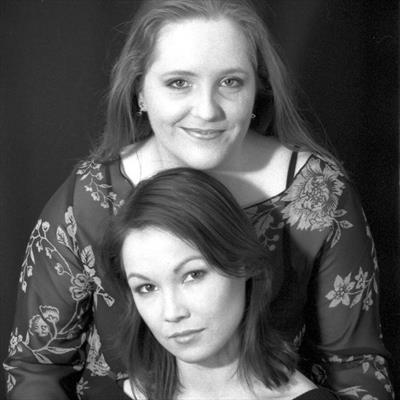
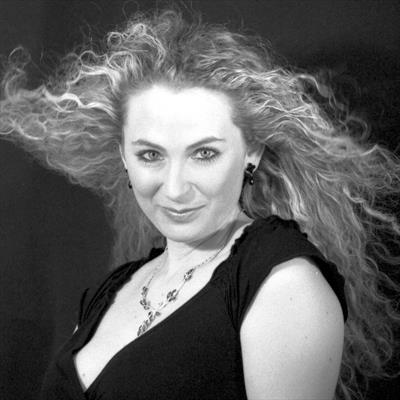
“Nachtfuchs II” (Night Fox) now continues the saga. She has already transformed into a non-human entity, though we do not yet know exactly what she truly is.Nachtfuchs (Joana Schick) relies on the life-giving essence of select individuals—those who offer themselves to her or whom she encounters along her path. Following a long and poetic seduction, she meets her first great lover, who allows her to partake in her own boundless wealth of knowledge and power. However, this strong-willed lover—"The Assertion"—ultimately resists Nachtfuchs’s superhuman allure; wistfully yet resolutely, she asserts herself and her own life, saving it from total dissolution. Sarah Bahr joins the cast as a mezzo-soprano to portray "The Assertion," while Stefanie Pirnay and Mia Sutedja continue in their familiar roles, representing the two central principles at the very heart of the unfolding process. Appearing only briefly on the periphery in this installment, "The Surrender" (sung by Rebecca Waldecker) now also takes the stage—a character destined to play a pivotal role in the upcoming third installment, the vastly different trajectory of which can already be glimpsed here. Once again, the majority of the libretto flows from the wonderful pen of Daniel Umber. The music was composed and produced, once more, by Pablo Pirnay-Dummer. New musicians also join the ensemble for this production. With the addition of Shir-Ran Yinon (violin), Julia Panzer (cello), Anna Merz (oboe), and Pavel Seleznev (bassoon), the ensemble is enriched in a truly profound way; their solo contributions serve to carry the piece in a manner that is truly exceptional.The first musical sketches for Nachtfuchs appeared in 1995; some restored recordings survive. From the start, the idea was an evolving multi-act piece built from cascading variations of eight bars. Its themes and the legendary, gender-neutral figure “Nachtfuchs” were already present.In 2002, Joana Schick joined and her first demo recordings created new momentum. With her, the protagonist of Nachtfuchs was found. Daniel Umber then agreed to write the libretto—an enormous gain for scope and clarity. Recordings for Nachtfuchs I began, much of which remains today. Parts II and III followed in 2003, created in intense phases. Part IV proved so complex that further work was needed in 2004. Vocal and soloist sessions ran in parallel, and the rising complexity soon exceeded what free time allowed. Later revisions led to replacement recordings in 2009 and continued work on the score.From 2022, final mixing and early mastering began. Electronic textures were modernized carefully to preserve continuity, and instrumental recordings had to bridge twenty years of technological change while keeping a coherent inner sound world. The composition itself supported this: act I is deliberately more electronic, and each narrative step becomes more orchestral. In many ways, Nachtfuchs required the technological development that came with time.